Jul 25, 2026Buying Guides
How to Evaluate a Pajama Manufacturer in China
Learn how to choose a reliable China pajama manufacturer for OEM, ODM, custom sleepwear, private label labels, packaging, samples, QC, and bulk orders.
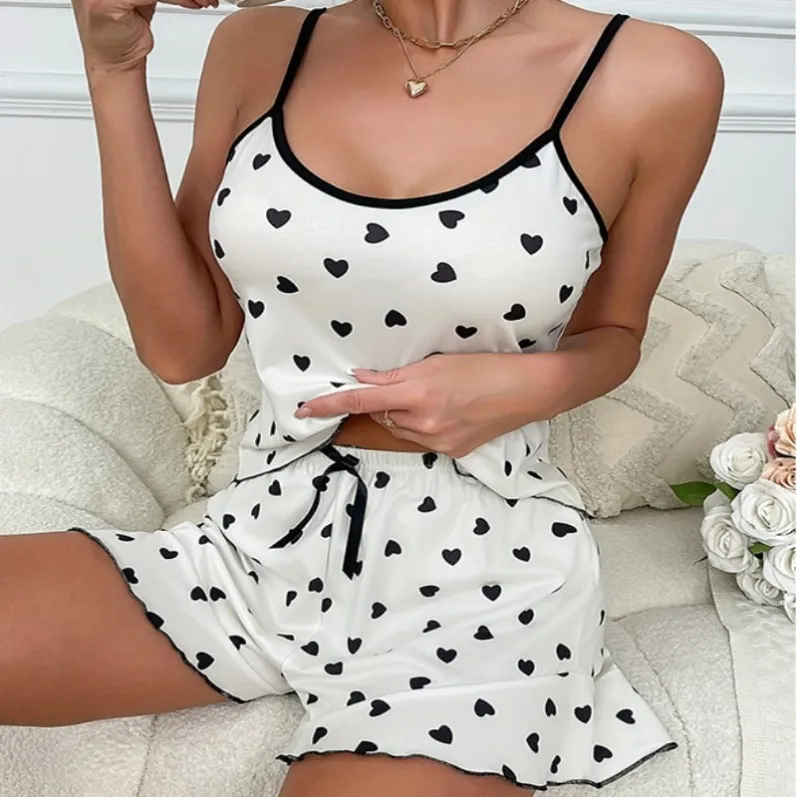
A reliable pajama manufacturer in China should help your brand reduce sampling, quality, delivery, and packaging risk before bulk production starts. The right factory can explain MOQ, fabric options, private label details, inspection steps, and export packing in a way your team can verify. This guide is written for fashion brands, boutique buyers, wholesalers, Amazon sellers, importers, and distributors comparing OEM or ODM pajama suppliers.
China has many sleepwear suppliers, but not every supplier is suitable for private label or repeat wholesale orders. Some can only sell available styles. Some can make samples but struggle with consistent bulk production. Others may quote quickly but give little detail about fabric, size tolerance, labels, packaging, or inspection.
Xinglaika Apparel works as an OEM and ODM apparel manufacturer for buyers who need custom pajamas, sleepwear, loungewear, nightdress, bathrobes, shirts, underwear, and private label apparel. Use the checklist below before sending your first purchase order.
Quick Answer For Buyers
If you are choosing a pajama manufacturer in China, check these seven points first:
Decision Area | What To Check | Why It Matters |
|---|---|---|
Product fit | Has the factory made similar pajama sets, robes, or nightwear? | Similar experience reduces sampling mistakes. |
Fabric support | Can they explain satin, cotton, modal, lace, ribbed, fleece, or printed fabrics? | Fabric choice affects comfort, cost, MOQ, and customer reviews. |
MOQ | Is MOQ explained by fabric, color, size, print, label, and packaging? | One flat MOQ number often hides later cost changes. |
Sampling | Is there a clear sample and revision process? | Bulk production should not start from unclear approval. |
Customization | Can they support labels, hangtags, packaging, logo, color, print, and size range? | Private label buyers need brand-ready goods, not plain garments. |
Quality control | Are fabric, cutting, sewing, measurement, and packing checks described? | QC prevents returns, complaints, and shipment disputes. |
Communication | Can the supplier understand design files, deadlines, target market, and export needs? | Clear communication reduces delay and wrong assumptions. |
Start with these points before comparing price. A very low quote can become expensive if the sample is wrong, sizing is inconsistent, packaging is not ready for retail, or the shipment misses your selling season.
Define Your Pajama Project Before Contacting A Factory
Before asking for a quote, define what you want the factory to make. A useful RFQ is more than a product name.
For example, "women pajama set" can mean a button-front long pants set, a short sleeve shorts set, a camisole set with lace trim, a cotton family pajama set, or a satin gift-box collection. Each style has different fabric use, pattern work, size grading, trim, button, packaging, and MOQ.
Prepare these details before contacting a China pajama factory:
- Product type: pajama set, loungewear, nightdress, robe, bathrobe, or matching family pajama.
- Target buyer: boutique retail, Amazon, wholesale, hotel, spa, distributor, or brand collection.
- Fabric preference: satin, cotton, modal, bamboo, lace, fleece, ribbed fabric, or available factory fabric.
- Quantity: target order quantity by style, color, and size.
- Size range: S-XL, plus size, kids, men, women, or custom size chart.
- Customization: woven label, printed neck label, hangtag, logo packaging, barcode sticker, gift box.
- Timeline: sample deadline, bulk delivery target, and seasonal sales window.
If you are still early in development, send reference images and explain your target market. A good ODM supplier can recommend available styles, fabric options, and practical MOQ choices.
Check Whether The Supplier Is A Factory Fit, Not Just A Product Seller
Many buyers search for a "pajama manufacturer China" because they want factory control. The key question is not only whether a supplier can show pajama photos. The question is whether they can handle your procurement task from sample to bulk order.
A factory-fit supplier should be able to explain:
- How it develops a sample from reference photos or a tech pack.
- Which fabrics are suitable for your target price and customer group.
- How it controls measurement tolerance during production.
- What happens if the first sample needs adjustment.
- How labels, hangtags, and packaging are prepared.
- How final goods are inspected and packed for export.
This is especially important for private label buyers. A product seller may have attractive ready-made styles, but a brand needs stable repeat production, consistent labels, and packaging that fits retail or ecommerce requirements.
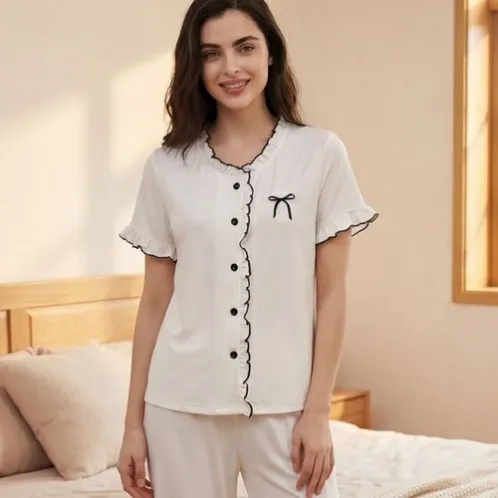
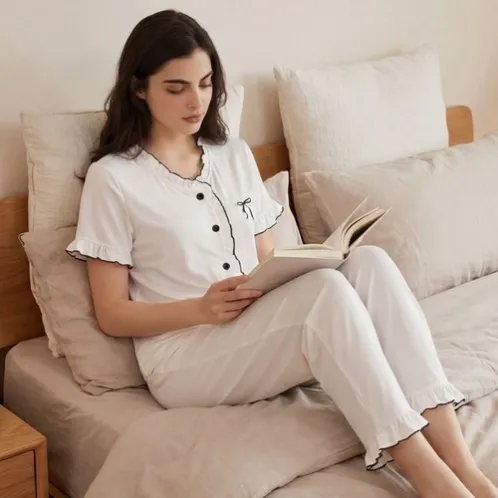
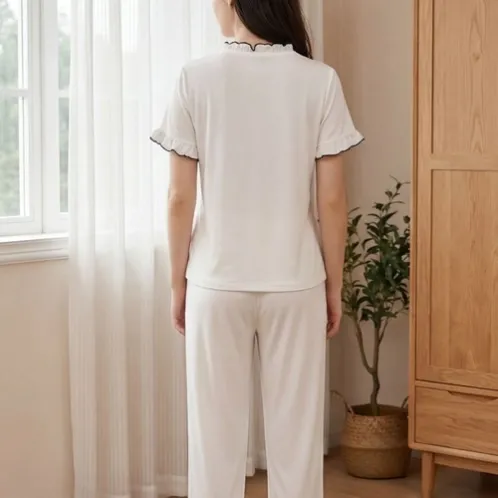
Xinglaika Apparel's current product range includes pajama sets, plus size pajamas, nightdress, robes, bathrobes, shirts, underwear, and fashion accessories. Buyers can review examples on the Products page, including styles such as the Women White Button Short Sleeve Pajama Set TE-160 and Plus Size Short Sleeve Printed Pajama Set AL-020.
Compare Fabric Options With Your Market In Mind
Fabric is one of the first decisions that affects price, comfort, appearance, and MOQ. Do not choose fabric only by how it looks in a photo. Think about how your customers will wear, wash, review, and reorder the product.
Fabric Option | Best For | Buyer Notes |
|---|---|---|
Satin | Boutique collections, gift sets, affordable luxury | Smooth appearance, strong visual appeal, often used for private label pajamas. |
Cotton | Daily sleepwear, family pajamas, warm-weather markets | Comfortable and familiar, but fabric weight and shrinkage need checking. |
Modal or bamboo blends | Soft loungewear and premium comfort lines | Good hand feel, often suitable for relaxed homewear collections. |
Fleece | Winter pajamas and robes | Warm, seasonal, and sensitive to packing volume. |
Lace trim fabrics | Nightdress, camisole sets, feminine collections | Trim quality, stitching, and skin comfort need careful review. |
Ribbed or stretch fabrics | Loungewear and fitted homewear | Fit and recovery should be checked in sample approval. |
Ask the manufacturer what fabric is available, what requires dyeing or custom printing, and how fabric choice changes MOQ. A supplier that only says "many fabrics available" is not giving enough procurement information.
Understand MOQ, Sampling, And Price Factors
MOQ is not one fixed number for every project. It changes according to fabric, color, print, size range, label, packaging, and production planning.
For available designs, MOQ can often be more flexible. For fully custom orders, buyers should expect higher MOQ because fabric sourcing, color matching, pattern development, label production, and packaging setup require more preparation.
When discussing MOQ, ask these questions:
- Is the MOQ per style, per color, or per order?
- Does MOQ change for custom fabric or custom print?
- Can available designs support a lower starting quantity?
- What is the MOQ for woven labels or custom packaging?
- Can the order include multiple sizes?
- Does sample cost count toward bulk production?
- What happens if the first sample needs revision?
Price also depends on details that buyers sometimes miss: fabric wastage, size grading, printing method, lace or trim cost, button choice, packaging volume, carton quantity, and inspection requirements. A useful supplier should explain these cost drivers before production begins.
Review The OEM And ODM Manufacturing Process
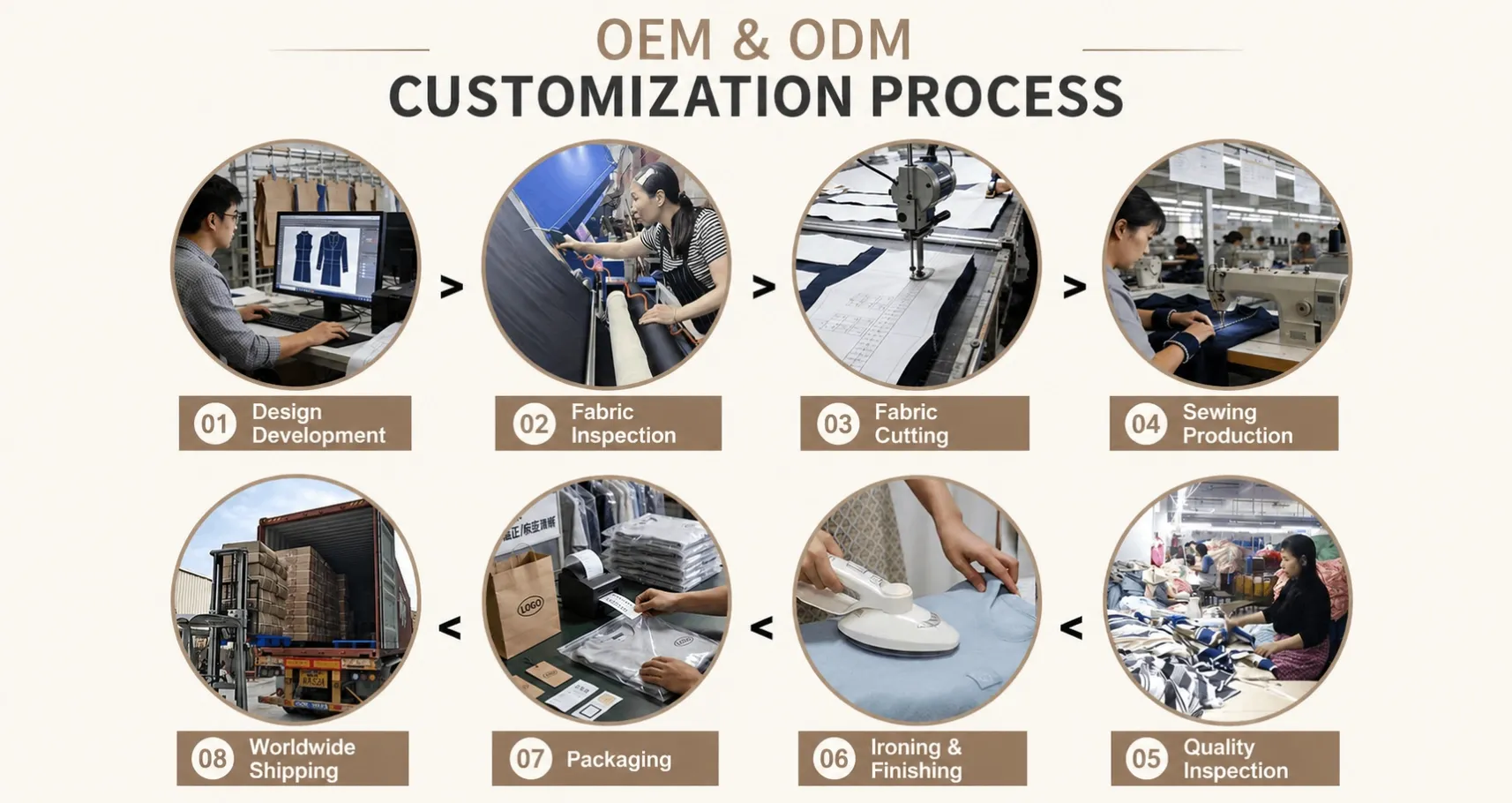
A professional pajama manufacturer should have a clear workflow. For custom sleepwear, Xinglaika Apparel's process can be planned around these stages:
Stage | What Happens | Buyer Output |
|---|---|---|
Fabric selection | The factory reviews hand feel, color, cost, season, and target market. | Fabric direction or swatch confirmation. |
Pattern development | The pattern is prepared or adjusted based on reference, sample, or tech pack. | Fit direction and size chart review. |
Sample making | A sample is made for style, fabric, fit, label, or packaging approval. | Written sample comments and revision list. |
Quality inspection | Fabric, cutting, sewing, measurements, trims, and packing are checked. | Lower risk before bulk shipment. |
Bulk production | Approved details are used for mass production. | Consistent goods based on confirmed sample. |
Packaging | Goods are folded, labeled, packed, and prepared for export. | Retail, wholesale, or ecommerce-ready shipment. |
Do not skip sample approval. A sample is not only a photo. It is the point where buyer and factory confirm fabric, sizing, stitching, trim, label position, and packaging details.
Check Quality Control Before Bulk Shipment
Sleepwear quality problems often appear after the buyer has already paid for bulk goods. Common problems include uneven stitching, wrong size labels, fabric too thin, inconsistent color, poor button attachment, loose threads, unclear print, lace discomfort, and packaging mistakes.
Ask your supplier how it checks:
- Fabric defects before cutting.
- Color difference between bulk fabric and approved sample.
- Pattern alignment for printed pajamas.
- Button, piping, lace, elastic, and waist tie strength.
- Measurement tolerance by size.
- Thread trimming and finishing.
- Label, hangtag, barcode, and packaging accuracy.
- Carton marks and export packing.
For brands and Amazon sellers, packaging mistakes can be as damaging as garment defects. A wrong barcode, missing size label, or mixed SKU can create warehouse delays and customer complaints.
Evaluate Communication And Export Readiness
Good communication is part of manufacturing quality. A reliable supplier should ask useful questions before quoting. If the factory never asks about target market, size range, quantity, packaging, or deadline, the quote may not reflect your real project.
Look for these signs:
- The supplier can respond in clear English.
- The supplier can read reference photos, size charts, and simple tech packs.
- The supplier explains tradeoffs instead of agreeing to everything.
- The supplier gives realistic sample and bulk lead time.
- The supplier can support private label, packaging, and export documents.
- The supplier can guide new buyers without forcing unnecessary complexity.
For many buyers, the safest next step is not a large bulk order. It is a sample, a small first run, or a catalog review. Xinglaika Apparel also provides a catalog download path for buyers who want to review options before requesting a quote.
Why Choose Xinglaika Apparel
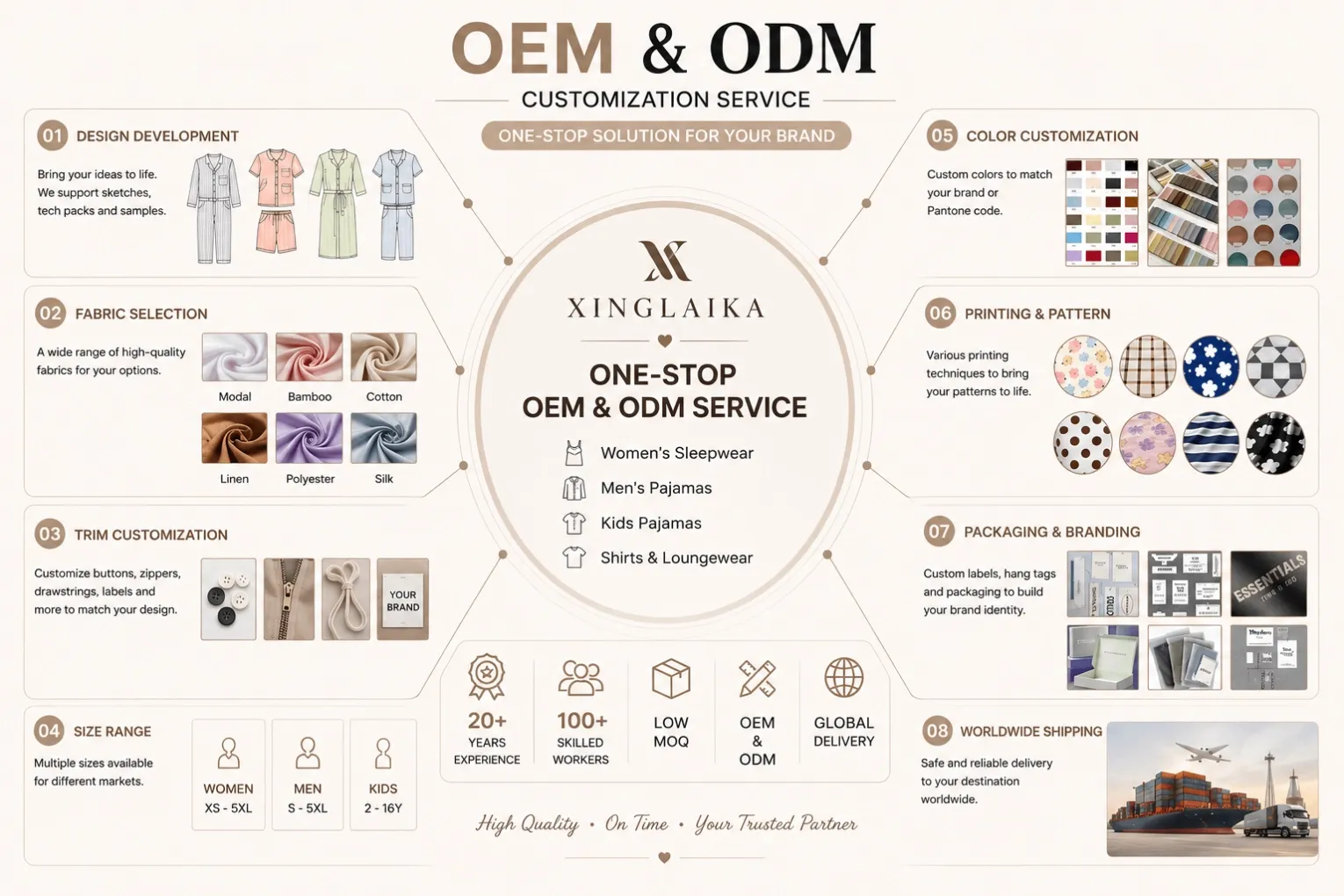
Xinglaika Apparel is a China OEM and ODM sleepwear and apparel manufacturer serving global B2B buyers. The company focuses on pajamas, women's pajamas, nightdress, bathrobes, loungewear, shirts, underwear, fashion accessories, and private label apparel.
For buyers comparing pajama suppliers, Xinglaika Apparel offers:
- 20+ years experience in apparel and sleepwear manufacturing.
- 100+ skilled workers supporting sample and bulk production.
- OEM and ODM service for custom and available-style projects.
- Flexible MOQ depending on available designs, fabric, and customization needs.
- Custom label support for private label brands.
- Custom packaging support for wholesale, retail, and ecommerce channels.
- Worldwide export support for brands, boutiques, wholesalers, Amazon sellers, importers, and distributors.
The best way to evaluate fit is to share your product direction, quantity, fabric preference, size range, and packaging requirements. The factory can then recommend practical options instead of giving a generic price.
FAQ
What is the best way to choose a pajama manufacturer in China?
Start by checking product experience, fabric options, MOQ rules, sample process, private label support, quality control, and communication. Then compare whether the supplier can support your buyer type, such as boutique, wholesale, Amazon, importer, or fashion brand.
What information should I send for a pajama quote?
Send reference photos or tech pack, fabric preference, size range, target quantity, color options, label requirements, packaging idea, target market, and delivery deadline. If you are not sure, send your target market and product direction first.
What is the difference between OEM and ODM pajamas?
OEM means the buyer provides the design, tech pack, size chart, logo, and packaging details. ODM means the factory can recommend existing styles, fabric options, and development directions that the buyer can customize.
Can I add my own label and packaging to pajamas?
Yes. Private label projects can include woven labels, printed neck labels, care labels, hangtags, barcode stickers, polybags, gift boxes, and custom packaging. MOQ and cost may change based on the label or packaging method.
How long does pajama sampling take?
Sampling time depends on fabric availability, pattern complexity, print, trims, and packaging mockups. For many custom pajama projects, buyers should plan enough time for first sample review and possible revisions before bulk production.
Should new brands start with many pajama styles?
Usually no. New brands often reduce risk by starting with a focused range, limited colors, and a practical size set. After sales data is clearer, they can expand fabrics, colors, prints, and packaging options.
How can I reduce quality risk before bulk production?
Approve fabric, size chart, sample, label, packaging, and written production details before bulk production. Ask for inspection points and confirm how the supplier checks measurements, sewing, labels, and packing before shipment.
Request A Custom Pajama Quote
Looking for a reliable OEM pajama manufacturer in China?
Contact Xinglaika Apparel with your design, reference photos, target quantity, fabric preference, size range, target market, and packaging requirements. The team can help you compare OEM and ODM options for your custom sleepwear project.
SEO metadata for reviewer: Meta title: Reliable Pajama Manufacturer China Buyer Guide. Meta description: Learn how to choose a reliable China pajama manufacturer for OEM, ODM, custom sleepwear, private label labels, packaging, samples, QC, and bulk orders. Suggested schema: Article, FAQPage, BreadcrumbList.A reliable pajama manufacturer in China should help your brand reduce sampling, quality, delivery, and packaging risk before bulk production starts. The right factory can explain MOQ, fabric options, private label details, inspection steps, and export packing in a way your team can verify. This guide is written for fashion brands, boutique buyers, wholesalers, Amazon sellers, importers, and distributors comparing OEM or ODM pajama suppliers.
China has many sleepwear suppliers, but not every supplier is suitable for private label or repeat wholesale orders. Some can only sell available styles. Some can make samples but struggle with consistent bulk production. Others may quote quickly but give little detail about fabric, size tolerance, labels, packaging, or inspection.
Xinglaika Apparel works as an OEM and ODM apparel manufacturer for buyers who need custom pajamas, sleepwear, loungewear, nightdress, bathrobes, shirts, underwear, and private label apparel. Use the checklist below before sending your first purchase order.
Quick Answer For Buyers
If you are choosing a pajama manufacturer in China, check these seven points first:
Decision Area | What To Check | Why It Matters |
|---|---|---|
Product fit | Has the factory made similar pajama sets, robes, or nightwear? | Similar experience reduces sampling mistakes. |
Fabric support | Can they explain satin, cotton, modal, lace, ribbed, fleece, or printed fabrics? | Fabric choice affects comfort, cost, MOQ, and customer reviews. |
MOQ | Is MOQ explained by fabric, color, size, print, label, and packaging? | One flat MOQ number often hides later cost changes. |
Sampling | Is there a clear sample and revision process? | Bulk production should not start from unclear approval. |
Customization | Can they support labels, hangtags, packaging, logo, color, print, and size range? | Private label buyers need brand-ready goods, not plain garments. |
Quality control | Are fabric, cutting, sewing, measurement, and packing checks described? | QC prevents returns, complaints, and shipment disputes. |
Communication | Can the supplier understand design files, deadlines, target market, and export needs? | Clear communication reduces delay and wrong assumptions. |
Start with these points before comparing price. A very low quote can become expensive if the sample is wrong, sizing is inconsistent, packaging is not ready for retail, or the shipment misses your selling season.
Define Your Pajama Project Before Contacting A Factory
Before asking for a quote, define what you want the factory to make. A useful RFQ is more than a product name.
For example, "women pajama set" can mean a button-front long pants set, a short sleeve shorts set, a camisole set with lace trim, a cotton family pajama set, or a satin gift-box collection. Each style has different fabric use, pattern work, size grading, trim, button, packaging, and MOQ.
Prepare these details before contacting a China pajama factory:
- Product type: pajama set, loungewear, nightdress, robe, bathrobe, or matching family pajama.
- Target buyer: boutique retail, Amazon, wholesale, hotel, spa, distributor, or brand collection.
- Fabric preference: satin, cotton, modal, bamboo, lace, fleece, ribbed fabric, or available factory fabric.
- Quantity: target order quantity by style, color, and size.
- Size range: S-XL, plus size, kids, men, women, or custom size chart.
- Customization: woven label, printed neck label, hangtag, logo packaging, barcode sticker, gift box.
- Timeline: sample deadline, bulk delivery target, and seasonal sales window.
If you are still early in development, send reference images and explain your target market. A good ODM supplier can recommend available styles, fabric options, and practical MOQ choices.
Check Whether The Supplier Is A Factory Fit, Not Just A Product Seller
Many buyers search for a "pajama manufacturer China" because they want factory control. The key question is not only whether a supplier can show pajama photos. The question is whether they can handle your procurement task from sample to bulk order.
A factory-fit supplier should be able to explain:
- How it develops a sample from reference photos or a tech pack.
- Which fabrics are suitable for your target price and customer group.
- How it controls measurement tolerance during production.
- What happens if the first sample needs adjustment.
- How labels, hangtags, and packaging are prepared.
- How final goods are inspected and packed for export.
This is especially important for private label buyers. A product seller may have attractive ready-made styles, but a brand needs stable repeat production, consistent labels, and packaging that fits retail or ecommerce requirements.
Xinglaika Apparel's current product range includes pajama sets, plus size pajamas, nightdress, robes, bathrobes, shirts, underwear, and fashion accessories. Buyers can review examples on the Products page (https://www.xinglaikaapparel.com/products), including styles such as the Women White Button Short Sleeve Pajama Set TE-160 (https://www.xinglaikaapparel.com/products/short-sleeve-pajama-set-te-160) and Plus Size Short Sleeve Printed Pajama Set AL-020 (https://www.xinglaikaapparel.com/products/plus-size-short-sleeve-printed-pajama-set-al-020).
Compare Fabric Options With Your Market In Mind
Fabric is one of the first decisions that affects price, comfort, appearance, and MOQ. Do not choose fabric only by how it looks in a photo. Think about how your customers will wear, wash, review, and reorder the product.
Fabric Option | Best For | Buyer Notes |
|---|---|---|
Satin | Boutique collections, gift sets, affordable luxury | Smooth appearance, strong visual appeal, often used for private label pajamas. |
Cotton | Daily sleepwear, family pajamas, warm-weather markets | Comfortable and familiar, but fabric weight and shrinkage need checking. |
Modal or bamboo blends | Soft loungewear and premium comfort lines | Good hand feel, often suitable for relaxed homewear collections. |
Fleece | Winter pajamas and robes | Warm, seasonal, and sensitive to packing volume. |
Lace trim fabrics | Nightdress, camisole sets, feminine collections | Trim quality, stitching, and skin comfort need careful review. |
Ribbed or stretch fabrics | Loungewear and fitted homewear | Fit and recovery should be checked in sample approval. |
Ask the manufacturer what fabric is available, what requires dyeing or custom printing, and how fabric choice changes MOQ. A supplier that only says "many fabrics available" is not giving enough procurement information.
Understand MOQ, Sampling, And Price Factors
MOQ is not one fixed number for every project. It changes according to fabric, color, print, size range, label, packaging, and production planning.
For available designs, MOQ can often be more flexible. For fully custom orders, buyers should expect higher MOQ because fabric sourcing, color matching, pattern development, label production, and packaging setup require more preparation.
When discussing MOQ, ask these questions:
- Is the MOQ per style, per color, or per order?
- Does MOQ change for custom fabric or custom print?
- Can available designs support a lower starting quantity?
- What is the MOQ for woven labels or custom packaging?
- Can the order include multiple sizes?
- Does sample cost count toward bulk production?
- What happens if the first sample needs revision?
Price also depends on details that buyers sometimes miss: fabric wastage, size grading, printing method, lace or trim cost, button choice, packaging volume, carton quantity, and inspection requirements. A useful supplier should explain these cost drivers before production begins.
Review The OEM And ODM Manufacturing Process
A professional pajama manufacturer should have a clear workflow. For custom sleepwear, Xinglaika Apparel's process can be planned around these stages:
Stage | What Happens | Buyer Output |
|---|---|---|
Fabric selection | The factory reviews hand feel, color, cost, season, and target market. | Fabric direction or swatch confirmation. |
Pattern development | The pattern is prepared or adjusted based on reference, sample, or tech pack. | Fit direction and size chart review. |
Sample making | A sample is made for style, fabric, fit, label, or packaging approval. | Written sample comments and revision list. |
Quality inspection | Fabric, cutting, sewing, measurements, trims, and packing are checked. | Lower risk before bulk shipment. |
Bulk production | Approved details are used for mass production. | Consistent goods based on confirmed sample. |
Packaging | Goods are folded, labeled, packed, and prepared for export. | Retail, wholesale, or ecommerce-ready shipment. |
Do not skip sample approval. A sample is not only a photo. It is the point where buyer and factory confirm fabric, sizing, stitching, trim, label position, and packaging details.
Check Quality Control Before Bulk Shipment
Sleepwear quality problems often appear after the buyer has already paid for bulk goods. Common problems include uneven stitching, wrong size labels, fabric too thin, inconsistent color, poor button attachment, loose threads, unclear print, lace discomfort, and packaging mistakes.
Ask your supplier how it checks:
- Fabric defects before cutting.
- Color difference between bulk fabric and approved sample.
- Pattern alignment for printed pajamas.
- Button, piping, lace, elastic, and waist tie strength.
- Measurement tolerance by size.
- Thread trimming and finishing.
- Label, hangtag, barcode, and packaging accuracy.
- Carton marks and export packing.
For brands and Amazon sellers, packaging mistakes can be as damaging as garment defects. A wrong barcode, missing size label, or mixed SKU can create warehouse delays and customer complaints.
Evaluate Communication And Export Readiness
Good communication is part of manufacturing quality. A reliable supplier should ask useful questions before quoting. If the factory never asks about target market, size range, quantity, packaging, or deadline, the quote may not reflect your real project.
Look for these signs:
- The supplier can respond in clear English.
- The supplier can read reference photos, size charts, and simple tech packs.
- The supplier explains tradeoffs instead of agreeing to everything.
- The supplier gives realistic sample and bulk lead time.
- The supplier can support private label, packaging, and export documents.
- The supplier can guide new buyers without forcing unnecessary complexity.
For many buyers, the safest next step is not a large bulk order. It is a sample, a small first run, or a catalog review. Xinglaika Apparel also provides a catalog download path (https://www.xinglaikaapparel.com/catalog-download) for buyers who want to review options before requesting a quote.
Why Choose Xinglaika Apparel
Xinglaika Apparel is a China OEM and ODM sleepwear and apparel manufacturer serving global B2B buyers. The company focuses on pajamas, women's pajamas, nightdress, bathrobes, loungewear, shirts, underwear, fashion accessories, and private label apparel.
For buyers comparing pajama suppliers, Xinglaika Apparel offers:
- 20+ years experience in apparel and sleepwear manufacturing.
- 100+ skilled workers supporting sample and bulk production.
- OEM and ODM service for custom and available-style projects.
- Flexible MOQ depending on available designs, fabric, and customization needs.
- Custom label support for private label brands.
- Custom packaging support for wholesale, retail, and ecommerce channels.
- Worldwide export support for brands, boutiques, wholesalers, Amazon sellers, importers, and distributors.
The best way to evaluate fit is to share your product direction, quantity, fabric preference, size range, and packaging requirements. The factory can then recommend practical options instead of giving a generic price.
FAQ
What is the best way to choose a pajama manufacturer in China?
Start by checking product experience, fabric options, MOQ rules, sample process, private label support, quality control, and communication. Then compare whether the supplier can support your buyer type, such as boutique, wholesale, Amazon, importer, or fashion brand.
What information should I send for a pajama quote?
Send reference photos or tech pack, fabric preference, size range, target quantity, color options, label requirements, packaging idea, target market, and delivery deadline. If you are not sure, send your target market and product direction first.
What is the difference between OEM and ODM pajamas?
OEM means the buyer provides the design, tech pack, size chart, logo, and packaging details. ODM means the factory can recommend existing styles, fabric options, and development directions that the buyer can customize.
Can I add my own label and packaging to pajamas?
Yes. Private label projects can include woven labels, printed neck labels, care labels, hangtags, barcode stickers, polybags, gift boxes, and custom packaging. MOQ and cost may change based on the label or packaging method.
How long does pajama sampling take?
Sampling time depends on fabric availability, pattern complexity, print, trims, and packaging mockups. For many custom pajama projects, buyers should plan enough time for first sample review and possible revisions before bulk production.
Should new brands start with many pajama styles?
Usually no. New brands often reduce risk by starting with a focused range, limited colors, and a practical size set. After sales data is clearer, they can expand fabrics, colors, prints, and packaging options.
How can I reduce quality risk before bulk production?
Approve fabric, size chart, sample, label, packaging, and written production details before bulk production. Ask for inspection points and confirm how the supplier checks measurements, sewing, labels, and packing before shipment.
Request A Custom Pajama Quote
Looking for a reliable OEM pajama manufacturer in China?
Contact Xinglaika Apparel (https://www.xinglaikaapparel.com/contact-us) with your design, reference photos, target quantity, fabric preference, size range, target market, and packaging requirements. The team can help you compare OEM and ODM options for your custom sleepwear project.A reliable pajama manufacturer in China should help your brand reduce sampling, quality, delivery, and packaging risk before bulk production starts. The right factory can explain MOQ, fabric options, private label details, inspection steps, and export packing in a way your team can verify. This guide is written for fashion brands, boutique buyers, wholesalers, Amazon sellers, importers, and distributors comparing OEM or ODM pajama suppliers.
China has many sleepwear suppliers, but not every supplier is suitable for private label or repeat wholesale orders. Some can only sell available styles. Some can make samples but struggle with consistent bulk production. Others may quote quickly but give little detail about fabric, size tolerance, labels, packaging, or inspection.
Xinglaika Apparel works as an OEM and ODM apparel manufacturer for buyers who need custom pajamas, sleepwear, loungewear, nightdress, bathrobes, shirts, underwear, and private label apparel. Use the checklist below before sending your first purchase order.
Quick Answer For Buyers
If you are choosing a pajama manufacturer in China, check these seven points first:
Decision Area | What To Check | Why It Matters |
|---|---|---|
Product fit | Has the factory made similar pajama sets, robes, or nightwear? | Similar experience reduces sampling mistakes. |
Fabric support | Can they explain satin, cotton, modal, lace, ribbed, fleece, or printed fabrics? | Fabric choice affects comfort, cost, MOQ, and customer reviews. |
MOQ | Is MOQ explained by fabric, color, size, print, label, and packaging? | One flat MOQ number often hides later cost changes. |
Sampling | Is there a clear sample and revision process? | Bulk production should not start from unclear approval. |
Customization | Can they support labels, hangtags, packaging, logo, color, print, and size range? | Private label buyers need brand-ready goods, not plain garments. |
Quality control | Are fabric, cutting, sewing, measurement, and packing checks described? | QC prevents returns, complaints, and shipment disputes. |
Communication | Can the supplier understand design files, deadlines, target market, and export needs? | Clear communication reduces delay and wrong assumptions. |
Start with these points before comparing price. A very low quote can become expensive if the sample is wrong, sizing is inconsistent, packaging is not ready for retail, or the shipment misses your selling season.
Define Your Pajama Project Before Contacting A Factory
Before asking for a quote, define what you want the factory to make. A useful RFQ is more than a product name.
For example, "women pajama set" can mean a button-front long pants set, a short sleeve shorts set, a camisole set with lace trim, a cotton family pajama set, or a satin gift-box collection. Each style has different fabric use, pattern work, size grading, trim, button, packaging, and MOQ.
Prepare these details before contacting a China pajama factory:
- Product type: pajama set, loungewear, nightdress, robe, bathrobe, or matching family pajama.
- Target buyer: boutique retail, Amazon, wholesale, hotel, spa, distributor, or brand collection.
- Fabric preference: satin, cotton, modal, bamboo, lace, fleece, ribbed fabric, or available factory fabric.
- Quantity: target order quantity by style, color, and size.
- Size range: S-XL, plus size, kids, men, women, or custom size chart.
- Customization: woven label, printed neck label, hangtag, logo packaging, barcode sticker, gift box.
- Timeline: sample deadline, bulk delivery target, and seasonal sales window.
If you are still early in development, send reference images and explain your target market. A good ODM supplier can recommend available styles, fabric options, and practical MOQ choices.
Check Whether The Supplier Is A Factory Fit, Not Just A Product Seller
Many buyers search for a "pajama manufacturer China" because they want factory control. The key question is not only whether a supplier can show pajama photos. The question is whether they can handle your procurement task from sample to bulk order.
A factory-fit supplier should be able to explain:
- How it develops a sample from reference photos or a tech pack.
- Which fabrics are suitable for your target price and customer group.
- How it controls measurement tolerance during production.
- What happens if the first sample needs adjustment.
- How labels, hangtags, and packaging are prepared.
- How final goods are inspected and packed for export.
This is especially important for private label buyers. A product seller may have attractive ready-made styles, but a brand needs stable repeat production, consistent labels, and packaging that fits retail or ecommerce requirements.
Xinglaika Apparel's current product range includes pajama sets, plus size pajamas, nightdress, robes, bathrobes, shirts, underwear, and fashion accessories. Buyers can review examples on the Products page (https://www.xinglaikaapparel.com/products), including styles such as the Women White Button Short Sleeve Pajama Set TE-160 (https://www.xinglaikaapparel.com/products/short-sleeve-pajama-set-te-160) and Plus Size Short Sleeve Printed Pajama Set AL-020 (https://www.xinglaikaapparel.com/products/plus-size-short-sleeve-printed-pajama-set-al-020).
Compare Fabric Options With Your Market In Mind
Fabric is one of the first decisions that affects price, comfort, appearance, and MOQ. Do not choose fabric only by how it looks in a photo. Think about how your customers will wear, wash, review, and reorder the product.
Fabric Option | Best For | Buyer Notes |
|---|---|---|
Satin | Boutique collections, gift sets, affordable luxury | Smooth appearance, strong visual appeal, often used for private label pajamas. |
Cotton | Daily sleepwear, family pajamas, warm-weather markets | Comfortable and familiar, but fabric weight and shrinkage need checking. |
Modal or bamboo blends | Soft loungewear and premium comfort lines | Good hand feel, often suitable for relaxed homewear collections. |
Fleece | Winter pajamas and robes | Warm, seasonal, and sensitive to packing volume. |
Lace trim fabrics | Nightdress, camisole sets, feminine collections | Trim quality, stitching, and skin comfort need careful review. |
Ribbed or stretch fabrics | Loungewear and fitted homewear | Fit and recovery should be checked in sample approval. |
Ask the manufacturer what fabric is available, what requires dyeing or custom printing, and how fabric choice changes MOQ. A supplier that only says "many fabrics available" is not giving enough procurement information.
Understand MOQ, Sampling, And Price Factors
MOQ is not one fixed number for every project. It changes according to fabric, color, print, size range, label, packaging, and production planning.
For available designs, MOQ can often be more flexible. For fully custom orders, buyers should expect higher MOQ because fabric sourcing, color matching, pattern development, label production, and packaging setup require more preparation.
When discussing MOQ, ask these questions:
- Is the MOQ per style, per color, or per order?
- Does MOQ change for custom fabric or custom print?
- Can available designs support a lower starting quantity?
- What is the MOQ for woven labels or custom packaging?
- Can the order include multiple sizes?
- Does sample cost count toward bulk production?
- What happens if the first sample needs revision?
Price also depends on details that buyers sometimes miss: fabric wastage, size grading, printing method, lace or trim cost, button choice, packaging volume, carton quantity, and inspection requirements. A useful supplier should explain these cost drivers before production begins.
Review The OEM And ODM Manufacturing Process
A professional pajama manufacturer should have a clear workflow. For custom sleepwear, Xinglaika Apparel's process can be planned around these stages:
Stage | What Happens | Buyer Output |
|---|---|---|
Fabric selection | The factory reviews hand feel, color, cost, season, and target market. | Fabric direction or swatch confirmation. |
Pattern development | The pattern is prepared or adjusted based on reference, sample, or tech pack. | Fit direction and size chart review. |
Sample making | A sample is made for style, fabric, fit, label, or packaging approval. | Written sample comments and revision list. |
Quality inspection | Fabric, cutting, sewing, measurements, trims, and packing are checked. | Lower risk before bulk shipment. |
Bulk production | Approved details are used for mass production. | Consistent goods based on confirmed sample. |
Packaging | Goods are folded, labeled, packed, and prepared for export. | Retail, wholesale, or ecommerce-ready shipment. |
Do not skip sample approval. A sample is not only a photo. It is the point where buyer and factory confirm fabric, sizing, stitching, trim, label position, and packaging details.
Check Quality Control Before Bulk Shipment
Sleepwear quality problems often appear after the buyer has already paid for bulk goods. Common problems include uneven stitching, wrong size labels, fabric too thin, inconsistent color, poor button attachment, loose threads, unclear print, lace discomfort, and packaging mistakes.
Ask your supplier how it checks:
- Fabric defects before cutting.
- Color difference between bulk fabric and approved sample.
- Pattern alignment for printed pajamas.
- Button, piping, lace, elastic, and waist tie strength.
- Measurement tolerance by size.
- Thread trimming and finishing.
- Label, hangtag, barcode, and packaging accuracy.
- Carton marks and export packing.
For brands and Amazon sellers, packaging mistakes can be as damaging as garment defects. A wrong barcode, missing size label, or mixed SKU can create warehouse delays and customer complaints.
Evaluate Communication And Export Readiness
Good communication is part of manufacturing quality. A reliable supplier should ask useful questions before quoting. If the factory never asks about target market, size range, quantity, packaging, or deadline, the quote may not reflect your real project.
Look for these signs:
- The supplier can respond in clear English.
- The supplier can read reference photos, size charts, and simple tech packs.
- The supplier explains tradeoffs instead of agreeing to everything.
- The supplier gives realistic sample and bulk lead time.
- The supplier can support private label, packaging, and export documents.
- The supplier can guide new buyers without forcing unnecessary complexity.
For many buyers, the safest next step is not a large bulk order. It is a sample, a small first run, or a catalog review. Xinglaika Apparel also provides a catalog download path (https://www.xinglaikaapparel.com/catalog-download) for buyers who want to review options before requesting a quote.
Why Choose Xinglaika Apparel
Xinglaika Apparel is a China OEM and ODM sleepwear and apparel manufacturer serving global B2B buyers. The company focuses on pajamas, women's pajamas, nightdress, bathrobes, loungewear, shirts, underwear, fashion accessories, and private label apparel.
For buyers comparing pajama suppliers, Xinglaika Apparel offers:
- 20+ years experience in apparel and sleepwear manufacturing.
- 100+ skilled workers supporting sample and bulk production.
- OEM and ODM service for custom and available-style projects.
- Flexible MOQ depending on available designs, fabric, and customization needs.
- Custom label support for private label brands.
- Custom packaging support for wholesale, retail, and ecommerce channels.
- Worldwide export support for brands, boutiques, wholesalers, Amazon sellers, importers, and distributors.
The best way to evaluate fit is to share your product direction, quantity, fabric preference, size range, and packaging requirements. The factory can then recommend practical options instead of giving a generic price.
FAQ
What is the best way to choose a pajama manufacturer in China?
Start by checking product experience, fabric options, MOQ rules, sample process, private label support, quality control, and communication. Then compare whether the supplier can support your buyer type, such as boutique, wholesale, Amazon, importer, or fashion brand.
What information should I send for a pajama quote?
Send reference photos or tech pack, fabric preference, size range, target quantity, color options, label requirements, packaging idea, target market, and delivery deadline. If you are not sure, send your target market and product direction first.
What is the difference between OEM and ODM pajamas?
OEM means the buyer provides the design, tech pack, size chart, logo, and packaging details. ODM means the factory can recommend existing styles, fabric options, and development directions that the buyer can customize.
Can I add my own label and packaging to pajamas?
Yes. Private label projects can include woven labels, printed neck labels, care labels, hangtags, barcode stickers, polybags, gift boxes, and custom packaging. MOQ and cost may change based on the label or packaging method.
How long does pajama sampling take?
Sampling time depends on fabric availability, pattern complexity, print, trims, and packaging mockups. For many custom pajama projects, buyers should plan enough time for first sample review and possible revisions before bulk production.
Should new brands start with many pajama styles?
Usually no. New brands often reduce risk by starting with a focused range, limited colors, and a practical size set. After sales data is clearer, they can expand fabrics, colors, prints, and packaging options.
How can I reduce quality risk before bulk production?
Approve fabric, size chart, sample, label, packaging, and written production details before bulk production. Ask for inspection points and confirm how the supplier checks measurements, sewing, labels, and packing before shipment.
Request A Custom Pajama Quote
Looking for a reliable OEM pajama manufacturer in China?
Contact Xinglaika Apparel (https://www.xinglaikaapparel.com/contact-us) with your design, reference photos, target quantity, fabric preference, size range, target market, and packaging requirements. The team can help you compare OEM and ODM options for your custom sleepwear project.